
How to terminate an HOA management company contract, step by step

The board is unhappy with its management company. Calls go unreturned, the monthly reports arrive late, and a few owners have started asking why. Someone says the board should just fire them, and then someone else asks what the contract says.
To terminate an HOA management company well, a board has to follow the contract, not just its frustration. This guide walks through the steps in order: reading the agreement, checking your reasons, getting advice, giving written notice, and handing off records so the community keeps running.
What It Means to Terminate an HOA Management Company
Ending a management agreement means the board formally stops the contract that hires the company to help run day-to-day tasks, such as collecting assessments, paying bills, handling owner questions and keeping records. A management agreement is a contract, so it has rules for how it can end.
Some agreements let either side end the contract with written notice after a set time. Others allow ending early only for specific reasons, called cause, such as a failure to do the work described. Some include fees for leaving early, or require notice before a certain date. The details are in your contract.
Here is a simple example. A management agreement costs $2,500 a month and requires 90 days’ written notice. The board sends notice by the method the contract names on March 1, and the contract ends no earlier than May 30. If the board stops paying on March 1, the company could claim three months of fees, which is $7,500, plus any penalties the contract sets.
Why It Matters for HOAs
Ending the contract badly can cost money, and it can leave the community without anyone doing the daily work. Boards sometimes find out too late that they missed a notice date, sent notice the wrong way, or did not get their records back.
The main risks are:
- Fees and penalties: early termination charges or paying through a notice period.
- Lost records: the company holds the bank statements, owner lists and files.
- Gaps in service: nobody pays bills or answers calls during the switch.
- Disputes: a poorly documented reason can lead to an argument about cause.
- Unhappy owners: a messy change creates confusion about where to send payments and questions.
The board also has duties to the community. A volunteer board that acts on a clear record, with advice from an attorney, is on firmer ground than one that acts on frustration.
How HOA Boards Should Handle It
Take the steps in order. Skipping the early ones is where problems start.
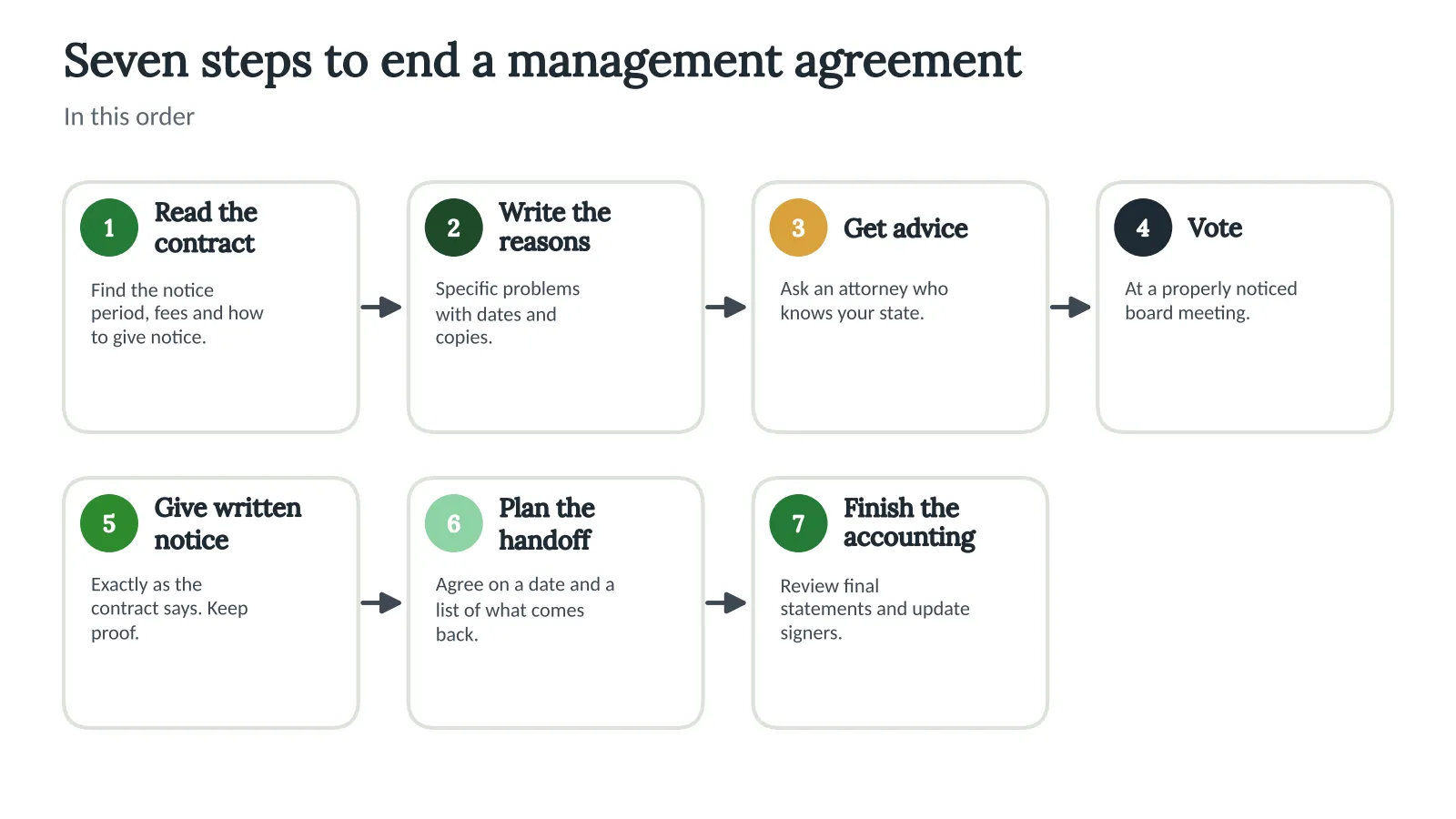
Ending the agreement
- Read the contract. Find the termination section, the notice period, any fees and the required way to give notice.
- Write down your reasons. List specific problems with dates, such as late reports or missed deadlines, and keep copies of emails and complaints.
- Get advice. Ask an attorney who knows your state to review the contract and your reasons before you act.
- Vote at a board meeting. Follow your documents, give proper notice of the meeting and record the vote in the minutes.
- Give written notice. Send notice exactly as the contract requires, by the stated method and to the stated address, and keep proof.
- Plan the handoff. Agree on a date and a list of what the company will return.
- Finish the accounting. Review the final statements and confirm that bank accounts and signers are updated.
Clauses to find first
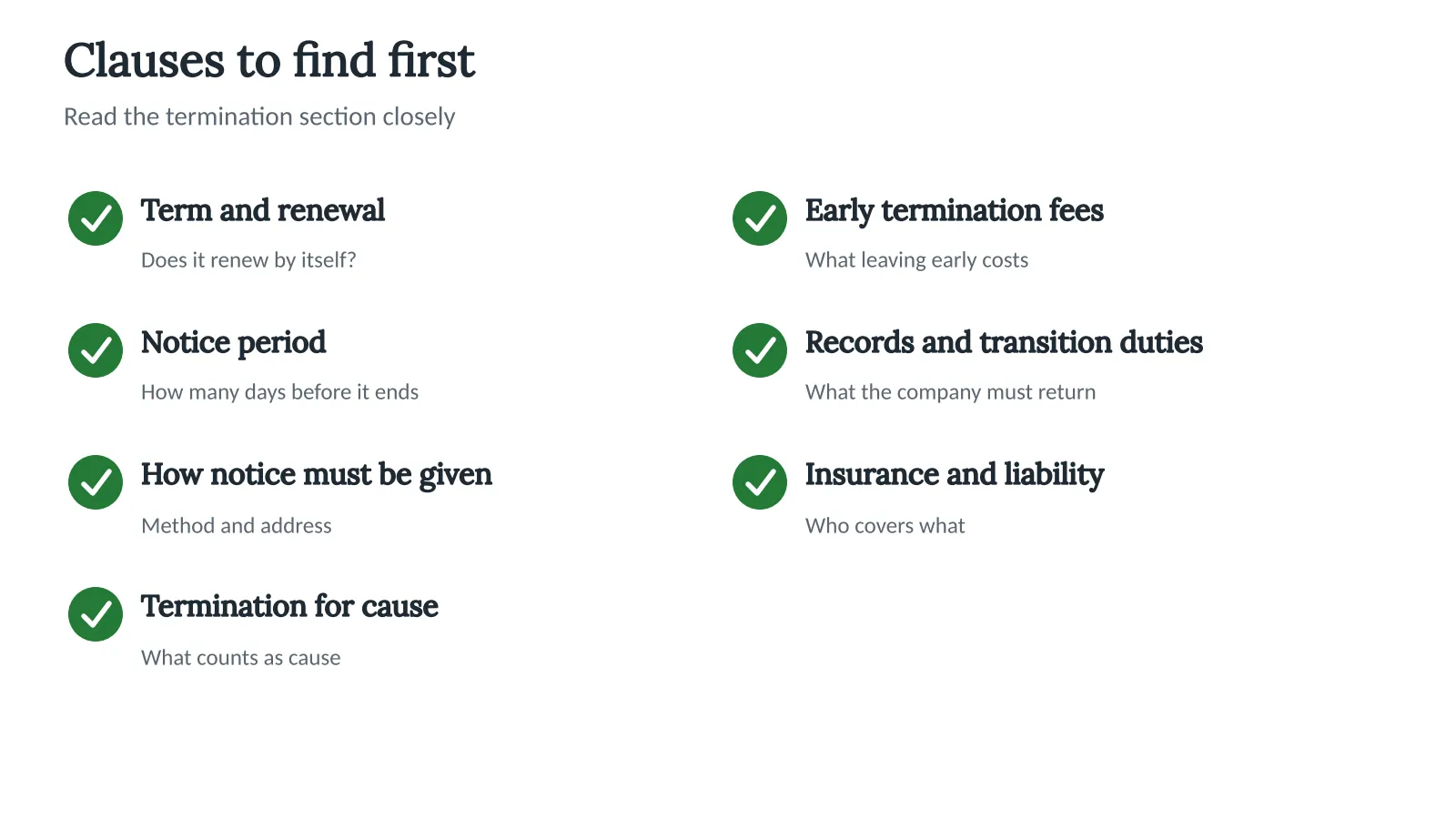
Read these clauses closely, and ask an attorney about any that are unclear. Some contracts renew automatically, so the notice date can arrive before you expect it. Our post on smarter contract management explains how to track dates like these.
Plan the handoff before you give notice
The most important work happens before the contract ends. Write a list of what must come back and who will do the work in the meantime.
What to get back
- Bank account access and a list of every signer, with the old company removed
- Financial records, statements and the general ledger
- Owner contact lists and payment histories
- Contracts, insurance certificates and vendor lists
- Governing documents, minutes and board records
- Keys, gate codes, website logins and software accounts
- Any owner funds, deposits or checks in progress
Decide who will answer owner calls and pay bills on the first day without the company. That might be a new manager, a board volunteer or a mix. If you plan to hire a replacement, our guides on hiring a new HOA management company, HOA management services and hidden fees in property management will help you compare. The management company screening checklist in our resource center covers what to ask.
Tell owners clearly
Send one clear message before the change takes effect. Say what is changing and when, where to send payments, whom to call, and when the board will give another update. Keep the tone calm and factual, and do not discuss the company’s performance in a public notice.
How Technology Can Help
A transition is easier when the records belong to the community, not the company. Neighborhood.online keeps every document in one place, searchable inside, so the board has its own copy of the contract, the minutes and the history. You can upload documents as they are, even scans, and you see what is missing.
Vendors sit in one list with contract dates, insurance and W-9 status, and Neighborhood.online warns before insurance lapses or a contract runs out, which helps the board catch a notice date. Notices to owners about the change can be written once and sent by email, first-class mail or certified mail, the way each neighbor asked, with a record of who got them. The board runs the community, and nothing goes out until the board approves it.
Key takeaways
- A management agreement is a contract, so read the termination section, the notice period and the required way to give notice first.
- Write down specific reasons with dates, and ask an attorney to review before you act.
- Vote at a properly noticed meeting, and send written notice exactly as the contract says.
- Plan the handoff of bank access, records, owner lists and keys before the contract ends.
- Tell owners what is changing, where to pay and whom to call.
Frequently asked questions
How do you fire an HOA management company?
Read the contract, record your reasons, get legal advice, vote at a board meeting, send written notice the way the contract requires, and plan the handoff of records and bank access.
How much notice does an HOA need to give a management company?
It depends on the contract and, in some places, state law. The notice period is usually in the termination section. Check it before you decide on a date.
Can an HOA terminate a management contract early?
Often only for reasons the contract allows, or by paying a fee or agreeing to a new date. An attorney can tell you what your contract permits.
What if the company will not give back our records?
Your contract and state law may require them to return records. Put the request in writing, keep a copy, and ask an attorney about next steps.
This post is general information, not legal advice. Laws change, and your governing documents may add rules of their own. We recommend consulting an attorney. We can help you find one.


