
HOA fees: what they really cover and how to explain them

When new homeowners get their first HOA bill, the first question is almost always, “Is this normal?” It is a fair question. HOA fees, also called assessments, vary from one community to the next based on location, amenities and what the association is responsible for.
This guide explains what the fees pay for, how to tell whether yours make sense, and how boards can explain them clearly.
What HOA Fees Are
HOA fees are the regular payments owners make to cover the shared costs of the community. The board sets them each year in the budget. Two kinds of spending sit inside the fee: the operating budget for everyday costs, and the reserve fund for big repairs years away.
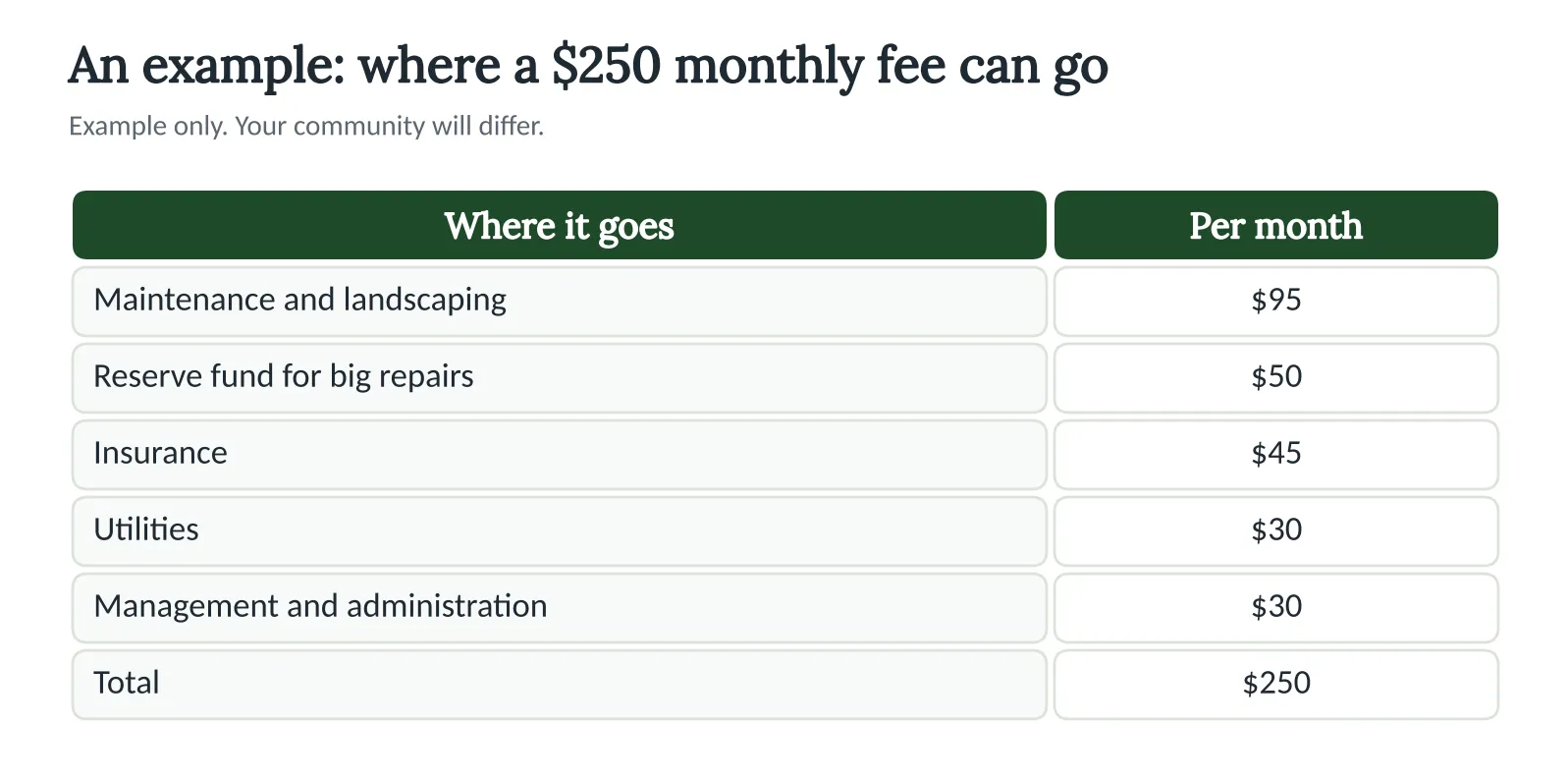
Here is a worked example. Say a community has 120 homes and a yearly budget of $360,000. Each home pays $360,000 divided by 120 homes, divided by 12 months, which comes to $250 a month.
Why Understanding HOA Fees Matters
A fee with no explanation feels like a bill with no receipt. Owners who do not know what the fee covers are more likely to push back, and boards that cannot explain it lose trust.
Buyers and boards both need to understand the difference between operating costs and reserves. Operating costs cover the work done this year, like mowing and insurance. Reserves cover long-term repairs, like roof replacements. Our guide to reserve studies explains how reserves are planned.
A fee that leaves nothing for repairs can be a warning sign. A higher fee can be fair if it covers a pool, a gate and landscaping. The fee only makes sense next to what the community provides.
How HOA Boards Should Handle Fees
Show the Budget in Plain Terms
Share the budget as a short page with five or six categories, like the example above. Owners do not need every line item. They need to see where each dollar goes. Our guide to understanding the average cost of HOA fees can help you compare with similar communities.
Explain Operating Costs and Reserves
Say how much of the fee goes to each. In the example, $50 of the $250 goes into the reserve fund. See operating vs. reserve funds for how to set the split.
Look for Savings Before Raising the Fee
When costs rise, review contracts first. Compare bids and check whether services are still needed. Our post on how HOAs are cutting costs to combat inflation shares ideas that do not cut service.
Report on It Regularly
A short treasurer report each quarter builds trust, because owners can see the plan and the results. For a simple format, see creating an effective treasurer report.
How Technology Can Help
Owners trust the fee more when they can find the budget themselves. Your bookkeeper or treasurer will keep the books in their own tool. The board can then share the budget, the reserve study and each financial report as documents in one place.
Neighborhood.online keeps governing documents, minutes and drafts in one searchable place called the Records Room, so an owner who wants last year’s budget can find it. See how it works. The Free plan gives a community a website and a home for its documents.
Conclusion
Homeowners are not just paying for lawn care or a pool. They are paying for upkeep, repairs and a stable community. This quarter, write a one-page summary that shows where each part of the fee goes, and share it with owners.


