
Condo down payments: what buyers and boards should know
Buying a condo can cost less than buying a single-family house, but one cost stays the same: the down payment. Whether you are a first-time buyer or a board member helping future neighbors, condo down payments are easier to plan for when you know what drives the number.
This guide explains what a down payment is, how the condo association comes into the picture, and what boards can do to make a sale go smoothly.
What a Condo Down Payment Is
A down payment is the cash a buyer pays up front toward the price of the home. The rest comes from a loan. The amount depends on the loan program and the lender, so a buyer should ask a lender what applies to them.
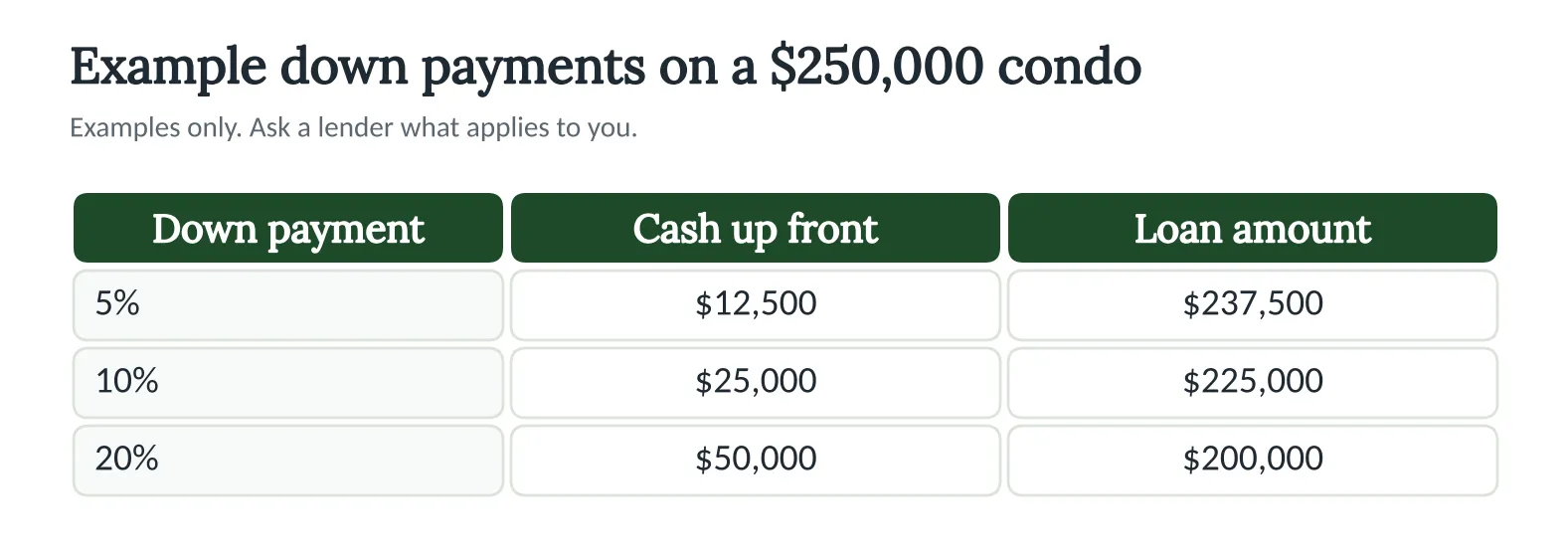
Here is a simple example. On a $250,000 condo, a 5% down payment is $12,500, a 10% down payment is $25,000, and a 20% down payment is $50,000. The bigger the down payment, the smaller the loan.
Why Condo Down Payments Depend on the Association
With a condo, the lender looks at more than the buyer. Some lenders also review the association’s budget, reserves and financial records, because the health of the association affects the value of every unit. If the association has weak finances, a lender may ask for a bigger down payment or decline the loan.
That is why strong association finances matter. A buyer also needs to plan for the monthly fee, since it adds to the cost of owning and can affect whether a loan is approved. Our guide to the average cost of HOA fees explains what the fee pays for.
How Boards Can Help Buyers
Keep the Reserve Study Current
A reserve study lists the big repairs ahead, like roofs, and how much to save for them. Buyers and lenders both want to see one. Read our guide to reserve studies if yours is out of date.
Keep Clear Financial Records
Be ready to share the budget, the latest financial report and the minutes. Our guide to creating a treasurer report shows a simple way to do it.
Match Monthly Fees to Real Costs
If the fee does not cover repairs, buyers will see the gap in the reserve numbers. Boards can read more about operating and reserve funds to make sure the fee fits.
Create a Buyer Packet
Put the documents buyers ask for in one folder: the budget, the reserve study, the rules and recent minutes. A ready packet saves time for the board and the buyer. Our overview of HOA communication covers how to share it clearly.
Help Buyers Stay Organized
A buyer’s own papers matter too: loan documents, statements and account logins. Suggest that buyers keep these in one safe folder, and use a password manager for logins.
How Technology Can Help
When the board has to share documents again and again, a shared place saves work. Neighborhood.online keeps governing documents, minutes and drafts in one searchable place called the Records Room, so the board can find the budget or the latest minutes in seconds.
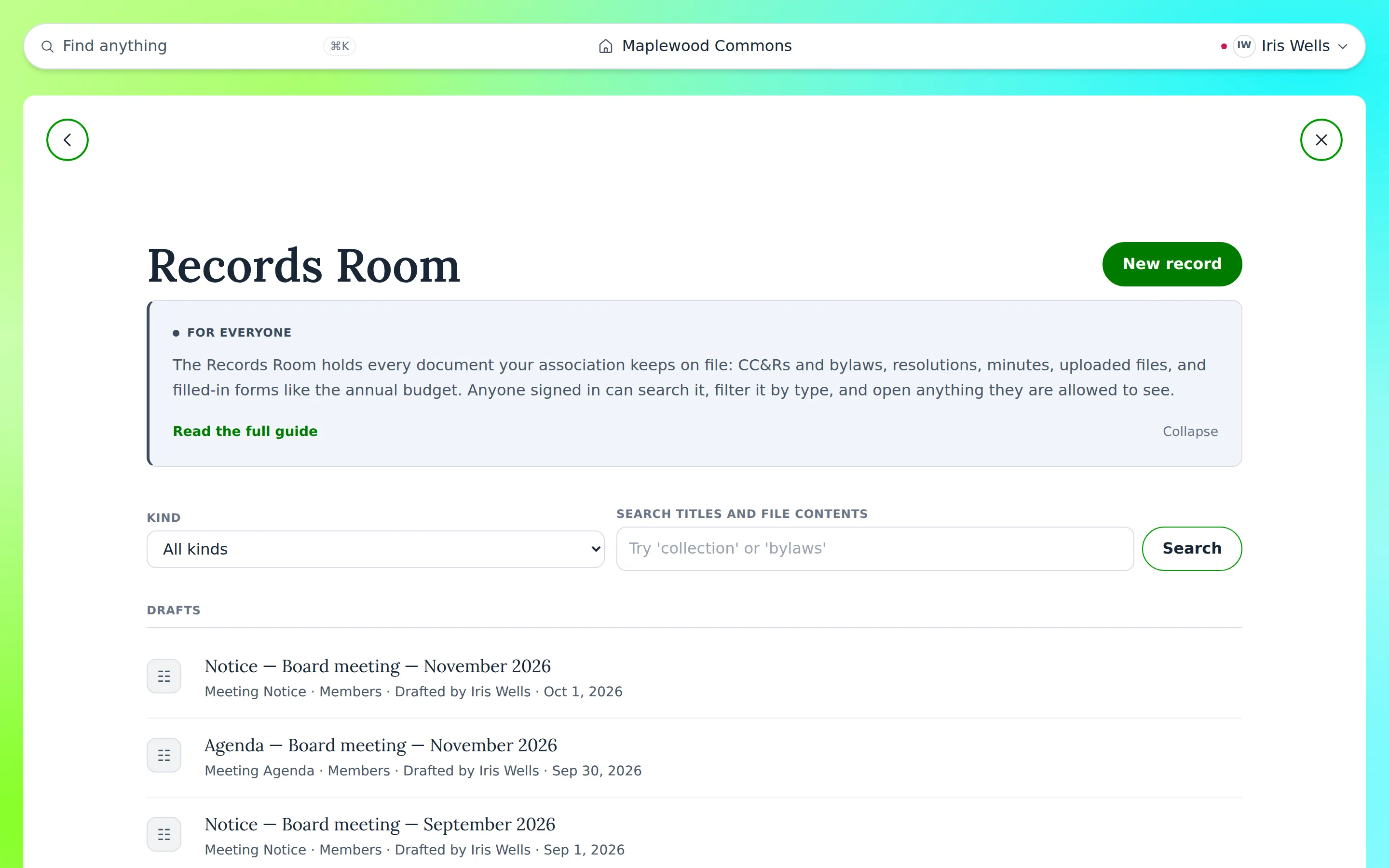
You can see how it works on the How It Works page. The Free plan includes a website and a home for your documents.
Conclusion
Whether you are buying or serving on the board, knowing what to expect makes the sale easier. If you are a buyer, ask a lender what down payment applies. If you are on the board, put the budget, reserve study and minutes in one folder before someone asks.


