
Why Your HOA Meeting Feels Like a Filibuster, and How Better Planning Fixes That

You sit down for what should be a one-hour board meeting. Two hours later, the group is still talking about who will mow the parkway, and someone is arguing about the color beige.
If your meetings feel like a filibuster, with long speeches and no end in sight, you are not alone. The good news is that it is not a personality problem. It is a planning problem, and planning problems can be fixed.
Without an Agenda, the Meeting Fills Itself
An agenda is the difference between a working meeting and an open mic night. Without one, topics overlap and real decisions get buried.
Use the same agenda format every time. Include board reports, old business, new business and owner comments. Old business means items carried over from earlier meetings, and new business means items raised for the first time. Share the agenda before the meeting so everyone arrives ready.
Set Time Limits
Give each item a time estimate. Pick a timekeeper to gently move the group along when a topic runs over. A “quick update” is a lot easier to keep quick when someone is watching the clock.
A steady meeting schedule also helps. If the board always meets on the second Tuesday, nobody feels the need to settle everything in one night, because the next meeting is already on the calendar.
Agree on Meeting Manners
Interruptions, speeches and side arguments can turn a 60-minute session into a long evening. Set a few ground rules at the start. This guide to board meeting etiquette is a good place to start. Passionate debate is fine when each person gets a fair turn and a time cap.
Do Not Let Scheduling Be the Excuse
Meetings that start late or take 27 emails to schedule are tiring before they begin. A poll tool lets the board vote on times, and a scheduling link lets members book a slot that fits the organizer’s calendar. Once the time is set, send a proper meeting notice to owners. Check your bylaws and state law for how much notice is required.
Minutes Are a Follow-Up Tool
If a decision is not written down, it can come back on the agenda next month. Assign someone to take meeting minutes and send them out soon after the meeting. Keep them in one place where the whole board can find them.
How Technology Can Help
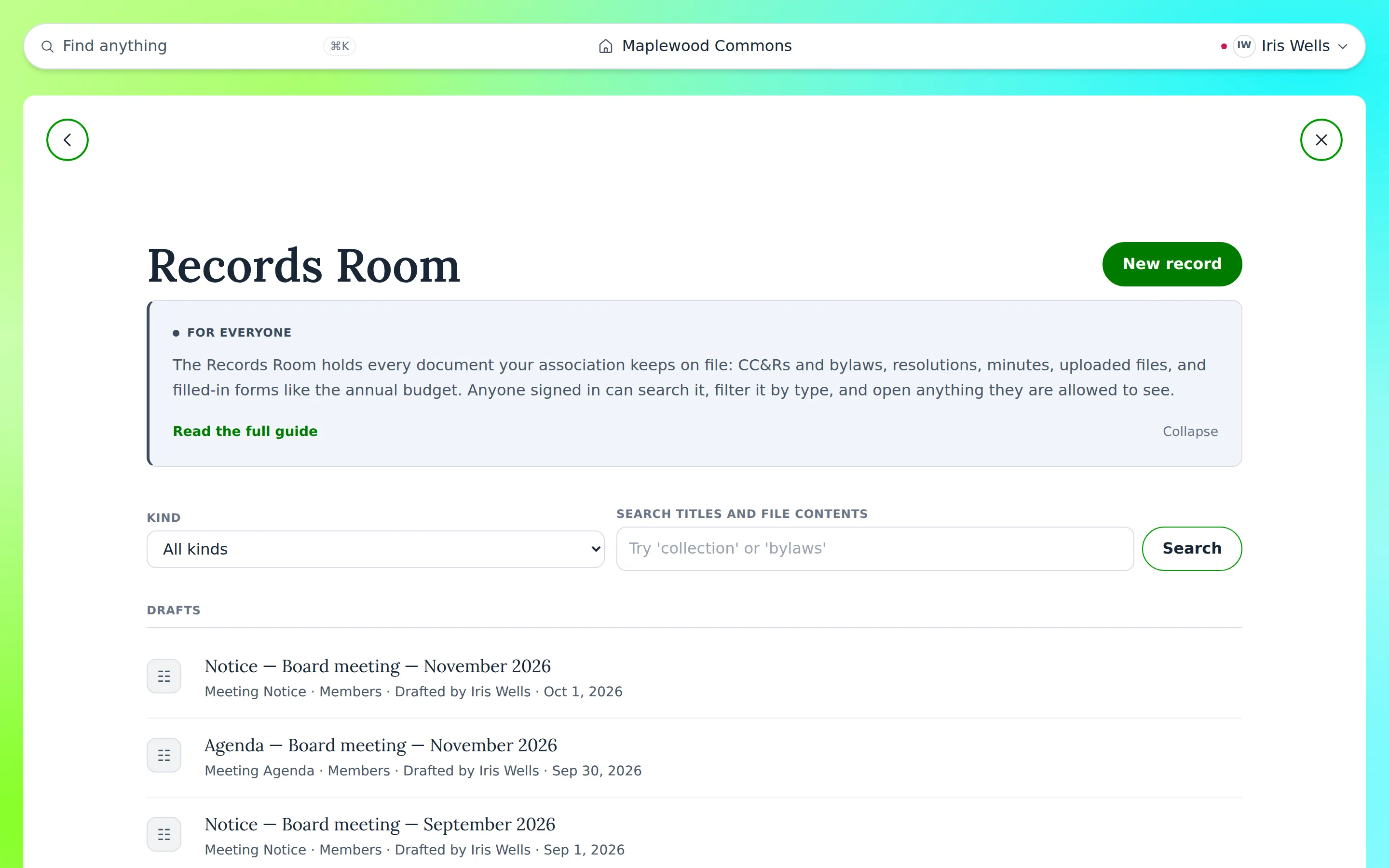
Neighborhood.online supports each of these steps. The board follows a workflow for calling a meeting: agenda, notice, notice period, meeting and minutes. Agendas and minutes can be drafted in plain language from your own bylaws and rules, and the board reviews and approves them. Notices go out by email, first-class mail or certified mail, with a record of who received them. Board tasks have an owner and a due date, so follow-up does not rest on one person’s memory. Minutes live in the Records Room.
The Free plan includes a community website and a home for your documents.
Conclusion
Short meetings come from good planning: a standard agenda, time limits, ground rules, a clear notice and written minutes. Try one change at the next meeting. Pick a timekeeper, and see how much faster the board moves.
This post is general information, not legal advice. Laws change, and your governing documents may add rules of their own. We recommend consulting an attorney. We can help you find one.


