
HOA transition: what it is and why it matters

When you move into a community with a homeowners association, you may not realize that the owners are not always running it on day one. Some new communities start under the developer’s control. HOA transition is the process of handing that control to the owners, and it is one of the biggest moments in a community’s life.
This guide explains what HOA transition is, why it matters, and what owners and developers can do to make it go well.
What HOA Transition Is
HOA transition is the handover of the association from the developer to the owners. During that time the board shifts from members the developer appointed to members the owners elect. Responsibility for governance, money and day-to-day work moves with it.
It is not a one-day event. It can take months or longer, because owners need time to learn the work. The point at which owners take over is set by your governing documents and state law, so ask your attorney how it works where you live.
Why HOA Transition Matters
A good transition sets up the community for the long run. These are the main reasons it matters.
- Long-term success: owners take over finances and operations, and need to keep services and amenities running.
- Owner control: owners elect the board, set priorities and decide how the community moves forward.
- Protection for owners: owners get access to financial records, legal papers and contracts that the developer kept. That is how problems like underfunded reserves or unfinished repairs come to light.
- Fewer legal and money problems: a rushed transition can leave construction defects or disputes unresolved. Inspections and careful record reviews help.
New boards should also ask their attorney which federal and state filings apply to them. Our post on the Corporate Transparency Act explains one recent change.
How Transition Works in Three Phases
The timeline below shows how the handover moves.
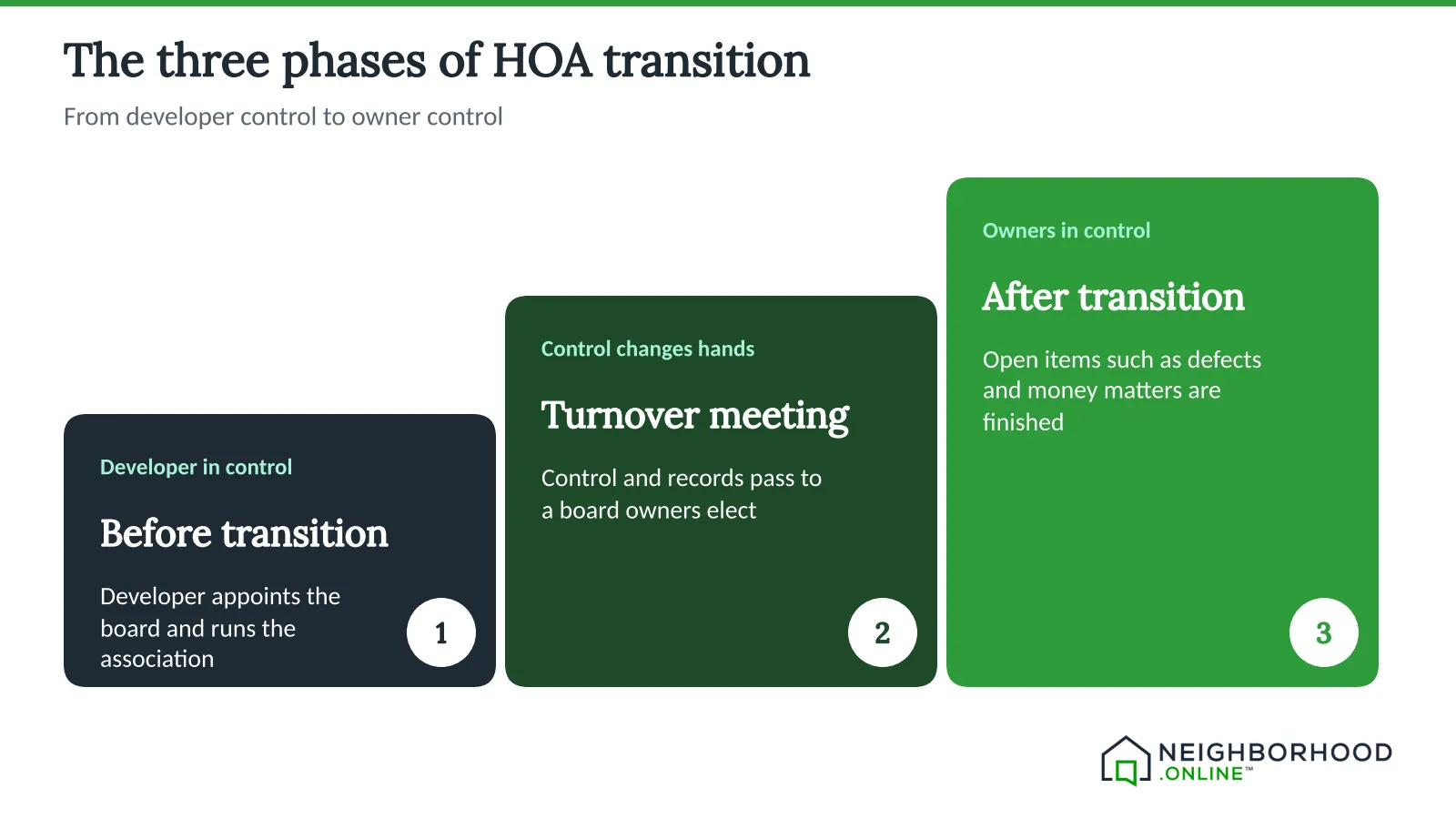
Phase 1: Before Transition
The developer is in charge. The developer appoints board members, handles finances and maintains the common areas, and owners have little say. As more homes sell, the developer starts to plan the handover. That includes forming a transition team with owners, advisors and property professionals.
Owners start to take on early roles, such as joining committees or advisory groups. This helps them learn how the association works.
Phase 2: The Turnover Meeting
At a set point, the developer hands control to the owners. This is a formal step that may include financial records, legal documents and maintenance reports. A board elected by owners takes over from there.
Phase 3: After Transition
Some work carries over, such as settling construction defects, finishing financial matters and completing infrastructure. Plan for these in writing, with dates. See our guide to a smooth financial transition.
How Owners Can Prepare
Owners can help the handover go well by doing four things.
- Read the governing documents, including the bylaws and rules.
- Review the budget and the reserve fund, which holds money for future repairs.
- Form committees, such as finance, maintenance and communications.
- Ask your attorney and other professionals for help where needed.
Our transition tips for homeowners and our HOA transition checklist can help you start.
Why Developers Should Care
A smooth handover leaves a well-run community behind, which helps owners and the developer’s reputation. Open communication and clear records reduce disputes. Our management company screening checklist helps owners hire help once they take over.
How Technology Can Help
Handing over a community means handing over its history. Neighborhood.online keeps every document in one place, and you can search inside them. When the board changes, the next board has the whole history.
See how records work. The Free plan gives a community a website and a home for its documents.
Conclusion
A well-planned transition makes the first years of owner control easier. If your community is approaching transition, read the governing documents, ask your attorney about the timeline, and start a conversation with your neighbors.
This post is general information, not legal advice. Laws change, and your governing documents may add rules of their own. We recommend consulting an attorney. We can help you find one.


