
Transparent HOA reports: what to share with owners and how to keep it simple

An owner asks where the money went, and the answer is a spreadsheet in the treasurer’s email. By the time the board finds it, the owner has told three neighbors that nobody will explain the numbers.
Transparent HOA reports solve that. They are short, regular updates that show owners what came in, what went out, what was fixed and what decisions are coming. This guide covers what to include, how to keep the work manageable for a volunteer board, and how to share the report so people actually read it.
What Transparent HOA Reports Are
A transparent HOA report is a plain summary the board shares on a regular schedule so owners can see how the community is run. It is not a pile of raw bank statements. It turns the facts into a short page that a neighbor can read in two minutes.
A good report answers four questions: how is the money, what got done, what is coming, and what do you think? The picture below shows a one-page layout that covers them.
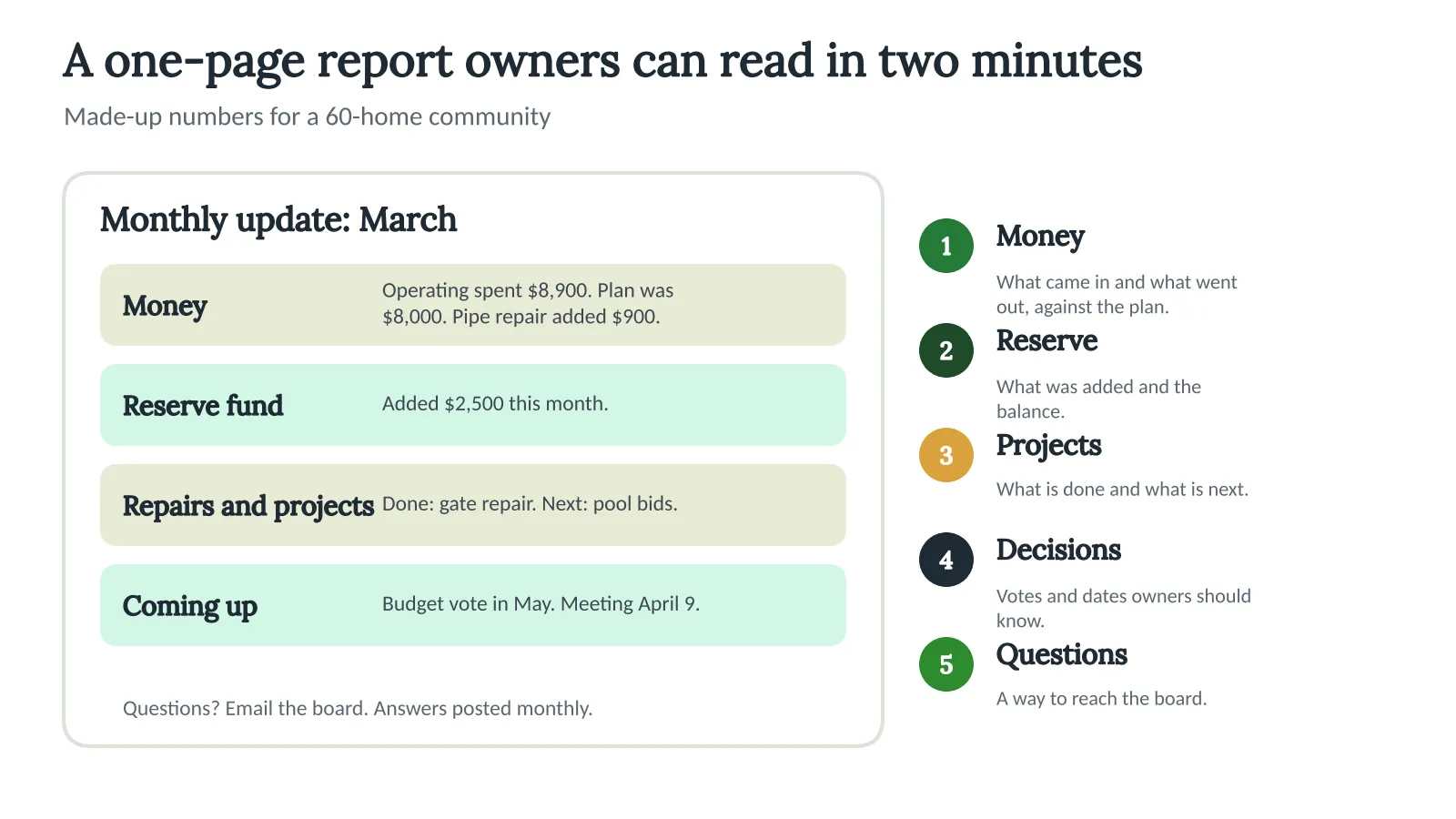
Here is a simple example with made-up numbers. A 60-home community has a $126,000 yearly budget, which is $10,500 a month. In March the board spends $8,900 on operating costs against a monthly plan of $8,000, because a burst pipe added $900. The report says so in one line: “Operating costs were $900 over plan because of a pipe repair at the clubhouse. The reserve fund received its planned $2,500.” Owners see the overage, the reason and the reserve contribution, with no mystery.
Why It Matters for HOAs
Owners pay assessments, and they want to know the money is used well. When reports are missing or hard to read, suspicion fills the gap. Silence does not look neutral, and it often looks like hiding something.
Regular reports help the board too:
- Fewer complaints: questions get answered before they turn into accusations.
- Easier budget talks: owners who have seen the numbers all year are less surprised by an increase.
- A paper trail: the next board can see what the community was told and when.
- Better habits: writing the report every month pushes the board to look at the numbers.
Transparency has limits. Do not put owners’ personal information, such as phone numbers, account numbers or payment history for named individuals, in a report. Matters protected by confidentiality, such as some legal advice, also stay out. Your documents and state law decide what owners may inspect, which our post on member rights to inspect financial records explains.
How HOA Boards Should Handle It
Keep the report short and regular. A short report written every month beats a long one written twice a year.
What to include
- Money summary: income, spending and the balance, compared with the budget, with a plain-language note on anything that is off plan.
- Reserve fund: how much was added and the current balance. Our guide to operating vs. reserve funds explains the difference.
- Repairs and projects: what was finished, what is in progress and what is waiting for bids.
- Decisions coming up: votes, architectural approvals and meeting dates.
- Owner questions: how to reach the board, and answers to recent questions.
If you need help writing the financial part, our templates and guides on creating an HOA treasurer report and what to include in your end-of-year report walk through both.
Choose a rhythm
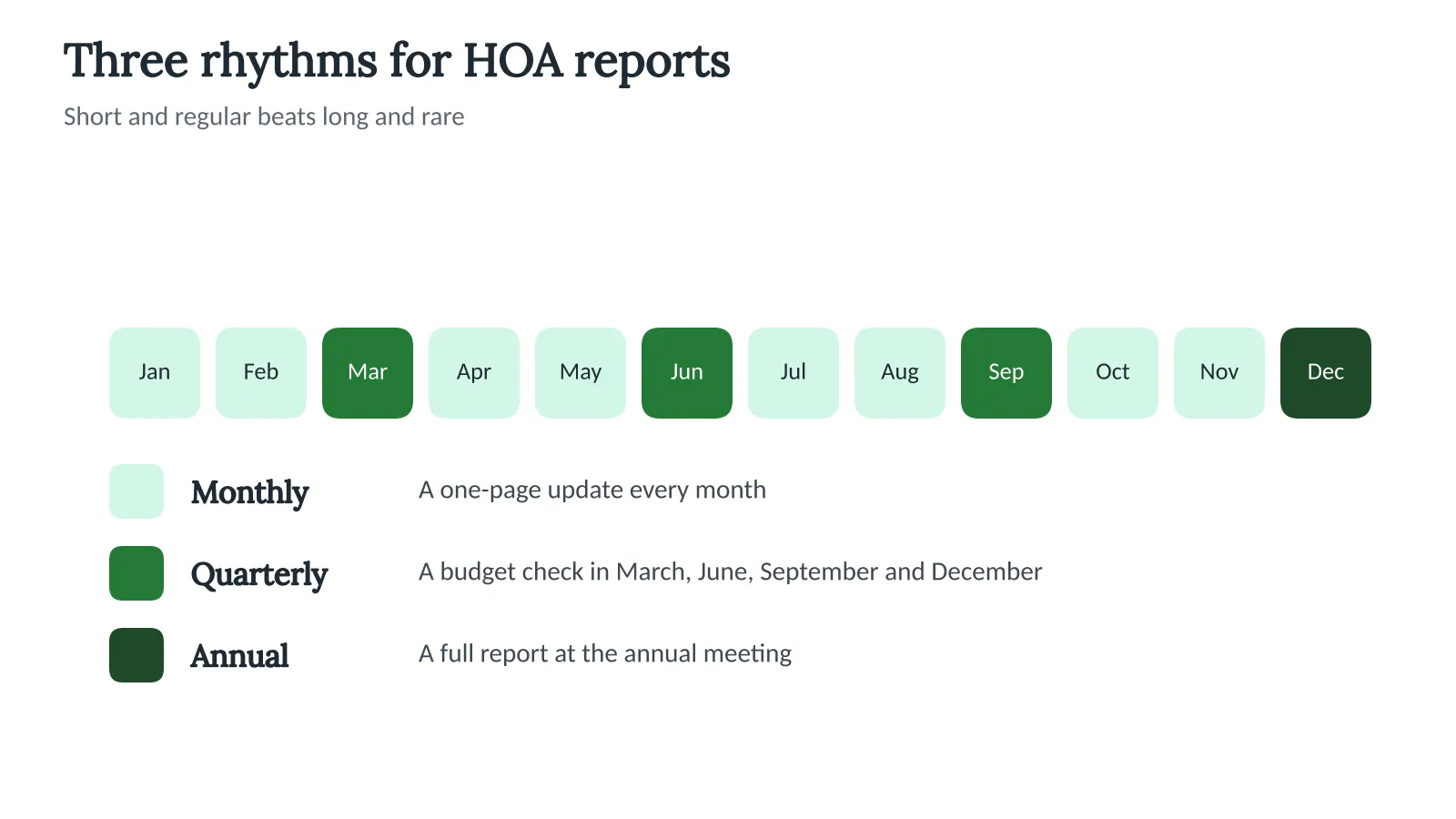
Match the rhythm to the type of report. Monthly updates keep owners informed, a quarterly look at the budget shows trends, and the annual report ties the year together for the annual meeting.
Share it where owners look
Get the report out
- Write it once. Use the same layout every month so owners know where to look.
- Review it at a board meeting. The treasurer presents it and the board approves it for release.
- Post it. Put the approved report on the community website in the same place every time.
- Point to it. Mention the report in your newsletter and at the annual meeting.
- File it. Keep every version with the minutes so the history is complete.
Owners can also learn to read the numbers themselves. Our beginner’s guide to reading an HOA financial statement is a good one to link from your report.
How Technology Can Help
Reports fall apart when they depend on one person’s inbox. Keeping each approved report with the rest of the community’s documents, in one place that owners and future boards can search, is what keeps the habit alive after the treasurer changes. Tools like Neighborhood.online keep every document in one place, searchable inside, and the free website gives the community a stable address to post them.
Owners also need to hear that a new report is out. A notice can be written once and sent by email, first-class mail or certified mail, the way each neighbor asked, and a delivery record shows who got it and when. Nothing goes out until the board approves it. When the board reviews and proposes budgets, the audit trail shows who changed what, which supports the transparency owners are asking for.
Key takeaways
- Share a short, regular report so owners see the money, repairs, upcoming decisions and how to ask questions.
- Use the same one-page layout each month and explain any number that is off plan.
- Keep personal information and confidential matters out of public reports.
- Post approved reports in one steady place and file each one with the minutes.
- Add a quarterly budget check and an annual report for the annual meeting.
Frequently asked questions
What should an HOA report to homeowners?
At a minimum, a money summary compared with the budget, the reserve balance, repairs and projects, upcoming decisions, and how to contact the board. Check your documents and state law for anything that is required.
How often should an HOA share financial reports?
Choose a steady rhythm. A short monthly update, a quarterly budget check and an annual report are one workable rhythm, and your documents or state law may require certain reports at certain times.
Can homeowners see the HOA’s financial records?
Owners often have a right to inspect records, within limits. Your governing documents and state law decide which records owners may inspect and how to request them. Our post on member rights to inspect financial records explains the basics.
What should stay out of an HOA report?
Owners’ personal contact information, account numbers, individual payment histories and legally confidential matters should stay out. Ask your attorney if you are unsure.


