
HOA meeting process: organize once, repeat every month

If your board starts from scratch before every meeting, you are spending hours you do not have and wearing out your volunteers. A repeatable HOA meeting process fixes that. You build the pieces once, and then each month you fill in the blanks.
Consistency does more than save time. It builds trust, because owners know when meetings happen, what will be covered and where to find the minutes.
What an HOA Meeting Process Is
An HOA meeting process is the set of steps your board follows for every meeting: pick the date, send the notice and agenda, hold the meeting, send the minutes, and review what is still open. The picture below shows the monthly rhythm.
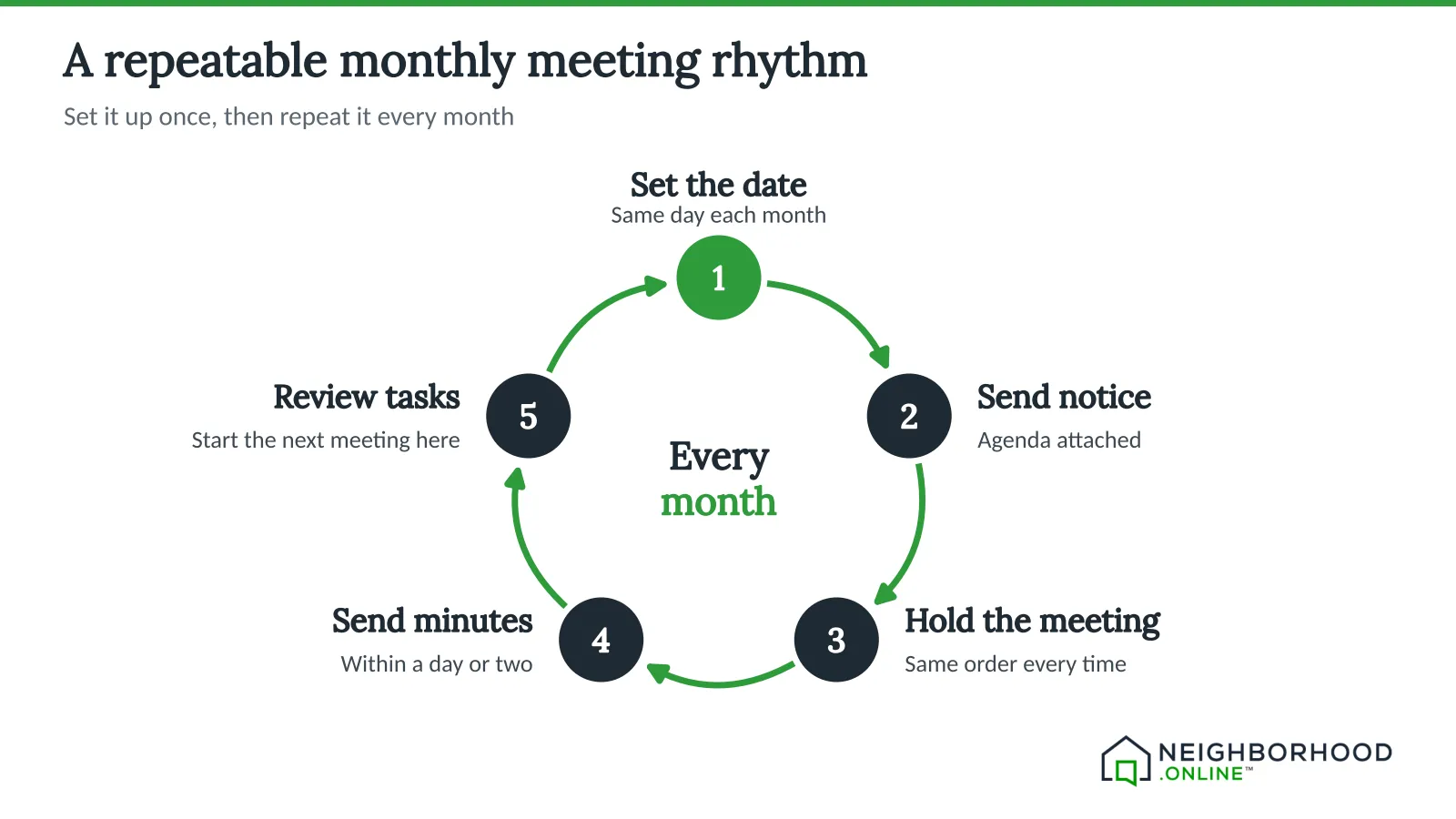
Think of it as a recipe. The first time takes effort. After that, the board just follows the steps.
Why a Repeatable Process Matters
Without a process, every meeting is a new puzzle. Notices go out late, agendas are missing items and nobody remembers who was supposed to write the minutes. Owners notice, and so do lawyers when something goes wrong.
A process also protects the board when members change. A new secretary should be able to open a folder and see what to do each month.
How HOA Boards Should Build the Process
Use a Standard Agenda
Stop writing agendas from scratch. A reliable order is call to order, approval of the last minutes, committee reports, old business, new business and owner comments. Save it as a template in your shared folder and reuse it every month. Add a time limit to each item to keep the meeting on track.
Set a Regular Schedule
Pick a day and time that works for the whole board, such as the second Thursday of every month at 6:30 p.m. A set schedule means no monthly “When can everyone meet?” email. Recurring meetings also help owners plan to attend. Our guide to HOA meeting calendar planning can help.
Send Notices on Time
Send the notice and agenda well before the meeting. How early depends on your governing documents and state law, so check them or ask your attorney. For a starting point, use our HOA meeting notice templates and read about HOA meeting notices.
Send the Minutes While They Are Fresh
Write the meeting minutes within a day or two, while the details are clear. Write down action items and name who owns each one, then store the minutes where owners can find them.
Keep the Same Manners Every Time
Follow the same ground rules at every meeting: respect speaking time, stay on topic and listen without interrupting. When feelings are strong, good structure helps. Our guide to board meeting etiquette has more.
Save the Process as a Toolkit
Keep the agenda template, the schedule, the notice templates and the minutes template in one shared folder. The next board can pick up where you left off.
How Technology Can Help
Good tools can follow your process for you. Neighborhood.online helps a board run its meetings step by step: the agenda starts with the standing items filled in, the notice goes out on time, and the minutes are drafted from the meeting itself. Nothing goes out until the board approves it.
See how it works, or start with the Free plan, which gives your community a website and a home for its documents.
Conclusion
Organize once, repeat every month, and enjoy the calm of knowing your meetings are under control. This week, write your standard agenda and pick your regular meeting day. Next, check out how to run board meetings that get things done.
This post is general information, not legal advice. Laws change, and your governing documents may add rules of their own. We recommend consulting an attorney. We can help you find one.


